Inner Wisdom Therapy
  • Welcome
  • Therapy
    • Specialization
    • Rates and Insurance
  • REST Coaching
  • Contact
  • Blog

Turning Inward: A November Gratitude Meditation and Yoga Nidra Practice

11/19/2025

0 Comments

 
Picture
Dearest November,
A time for turning in and slowing down. The harvest is complete, the frenetic energy of summer a mere sun-dappled memory. Trick or treaters came and went, along with the winds signaling the change of the season. The wheel is turning, away from the light for now as the days become dramatically shorter. 
These days, I am more tired. I want to turn in earlier and stay warm under the blankets into the morning. I crave the mystical taste of dreams. 
I look at my life right now and it is so very full. In the heart of raising kids, in the core of my career. For now, there is always too much. Too much to do. Too much to attend to. Too much mess, too many calls to return, too many tasks to complete. I am often overwhelmed. If I stopped sleeping, I still wouldn’t have the time to get through the to-do list. And…here come the holidays!
I want to remember now in November that my life won’t always be this full. And when passes, I will most likely feel bereft.
In the absence of long bright days, I also find myself face to face with darkness much more. Confronted with loss, aware of mortality. The reality that we lose all that we have in this life, eventually. I don’t want to turn away from this. I want this knowing to live at the center of my life.
I remember when I have had health scares, or the terrifying moment when I lost sight of my 5 year old son in the Chicago airport. Those moments we’ve all had,  when everything gets stripped down to reveal that which is most essential. 
Fleeting moments we have with our loved ones that we are hypnotized into thinking last forever. 
The health of our bodies that will someday, sooner than we believe, fail us. 
This is when I fall to my knees in gratitude. This is when I want to remember that, as Rumi said, “There are hundreds of ways to kneel and kiss the ground.”
Out of gratitude for all of you, I want to offer this Non Sleep Deep Rest meditation, also known as yoga nidra. This is a special recording, as it contains within it a gratitude practice, and is backed by bilateral nature sounds. 
I invite you to claim some quiet time, plug in your headphones, find a space where you won’t be interrupted, and tune in here. 
And as always, if you love this practice and want to explore working with me more, find me here. 

Bowing in gratitude.
Leilani
0 Comments

Rest As Radical Presence In A Time Of Cruelty

8/16/2025

0 Comments

 
I want to talk about what’s going on in DC this week.


I just recently recovered from a bad bout with Covid, my first ever time getting the little bugger. Bone deep exhaustion hit me like a truck, and I had no choice but to rest. Deeply.


I cut my engagement with the outside world way down. Did all my rest practices because it was a complete necessity to do so. I turned on the binaural beats and spoke gently with my body. I practiced treating my body like a temple. Stayed present with my breathing. For many days, I centered the practice of deeply nurturing myself.


Towards the end of my Covid journey, when I was almost back to normal but still slowed way down with all of these beautiful rest practices, I turned on my car radio and heard this story on NPR: Trump's purge of Washington's homeless encampments escalates
Picture
​For anyone that isn’t following, Trump has sent in the National Guard to clear homeless encampments in our nation’s capital.


Normally, when I hear a story like this--


Wait. Let me pause and unpack those words first. A story like this is not normal. The reality is that I, like many of us, have become numb to stories like this, due to the way I consume media in my day to day life, and due to Trump’s incessant and indifferent use of cruelty in his dealings with marginalized people and populations.


Okay, now I will continue. These days, when I hear stories like these, I feel sad, angry, and helpless for a few moments, and then I quickly turn my attention elsewhere to escape the discomfort. This day however, in this slowed-down and deeply nurtured state when I heard this story on the radio, I noticed a difference in my ability to actually digest and sit with what is happening.


David Beatty, a 65 year old man currently experiencing homelessness in this DC encampment, really struck me with these words.


“The idea that we’re poor makes them uncomfortable. They don’t want to be reminded that poor people exist.”


I invite you to sit with that statement for a moment. Really sit with it.


When I sit with these words, and when I really look at how we are treating homelessness in this culture, I am amazed. Deeply.


Now I invite you to take a deep breath, drop into your body, and read Trump’s statement on this event, a statement made from his gold-plated Oval Office.


“We’re going to be removing homeless encampments from all over our parks, our beautiful, beautiful parks, which a lot of people can’t walk on, they’re very dirty. There are many places they can go, we’re going to help them as much as you can help. But they’re not going to be allowed to turn our capital into a wasteland.”


We’re going to help them as much as you can help. They won’t be allowed to turn our capital into a wasteland. Very dirty.


When reporters asked David Beatty where he would be sleeping that night, he replied, “I don’t know. I don’t know.”
Picture
​Inhale, exhale. Let it land. Let yourself assimilate this...


The radio jumped immediately to the next story, normalizing the cruelty. I turned it off, as I recognized the need for a moment of silence to assimilate what is happening. I wish the radio stations would recognize this as well.


The National fucking Guard is called in to clear homeless people from our capital, spending who knows how much of our tax dollars. Terrorizing poor people. So that Trump can look like a Strong Man. A Bearer of Order.


Homelessness is a crime against humanity, yet they want to jail them for being poor.


Sitting in my car, assimilating this story, I remembered this quote by one of my favorite long-time teachers, Thich That Hanh.
"Do not avoid contact with suffering or close your eyes before suffering. Do not lose awareness of the existence of suffering in the life of the world. Find ways to be with those who are suffering by all means, including personal contact and visits, images, sounds. By such means, awaken yourself and others to the reality of suffering in the world."
Picture

I am so uncomfortable with all of this. However, in this rested state, I don’t flee the discomfort. I feel the sorrow. I feel that familiar mixture of anger and helplessness that makes me want to crawl out of my skin whenever I face this reality: Our country is in so much trouble. Our world is in so much trouble.


I invite you to sit with me in this mess. Sit with it all. Wait for the next step to become clear. Don’t react. Respond Skillfully.


Many people see the act of rest as escape. I’m not resting to escape.


I’m resting to get intimately connected with my self, to tap into my inner knowing.


I’m resting to dream, to imagine the way forward from here, a way through this mess we’re in as a country. I’m resting to get more present with myself and with the world around me.


I’m resting to wake up.

Join me here.
​
#DCHomelessness #DCHousingCrisis 
​
#RestAsResistance #EndHomelessness #HumanRights #daringtorest #rootedinrest
0 Comments

What is Rest Coaching?

7/3/2025

2 Comments


Dear community,
Happy summertime! I hope you are soaking in the earth’s full bloom. Just like the fruit of the earth is revealed during this season, so is the fruit of our personal labor. In the spirit of summertime, I am  excited to reveal to you the unfurling of a new branch of my professional practice: Rest Coaching.

I completed this intensive training with Karen Brody at Daring to Rest last December, after previously completing her yoga nidra facilitator training in 2021. I spent the winter and spring steeping in and integrating the materials and practicing with both myself and individual clients, and became certified as a Rest Coach with Daring to Rest in May of this year.

So far, every time I’ve mentioned this Rest Coach journey to friends, I’ve see this their eyes light up with curiosity as they: What’s Rest Coaching?

And every time someone asks me this question, I break into a huge grin. Because Rest lights me up.

If you are  living and working in this day and age, chances are you are under-rested.

​And I’m talking about so much more than sleep.

I am speaking to the rhythm in which we live our lives. I am speaking to the hyper-productivity that the dominant culture of extractive capitalism demands from us.

I am talking about the grind.

The never-ending rush from one task to the next, with the underlying anxiety whispering in your ear telling you you did not check enough tasks off from your to-do list today.

I am speaking to ancestral and cultural exhaustion contracts that keep many of us in deeper states of unrest than others due to institutionalized racism, sexism, and classism.

I am speaking to the thriving epidemic of loneliness, because so many of us are too busy grinding or too distracted by our screens to drop in meaningfully with one another. I am talking about the feeling of emptiness you may feel at the end  of your work day, the anxiety that arises when it comes time to slow down, the impulse to reach for the screen or food or substances you may use to ease the  transition from busy-ness to sleep—sleep that is all too often punctuated by restlessness.

So how do we remedy all of this? What, indeed, is Rest Coaching?

Here now, I invite you to take a gentle, deep breath in…and a  long slow exhale, imagining the following scene.
Picture
Rest creates a sacred container. A soft place where I can calmly welcome any impulse, sensation, emotion. I can sit with whatever comes and share a pot of tea in a sun spotted lush garden, in a slow relaxed way. If I haven't rested well for a while, the feelings that come up at first might be uncomfortable. I can embrace them all as I am embraced by rest.​


​Rest Coaching follows the framework of the Rested Path™, a nonlinear path that leads us to the reclamation of our bodies, our voices, and our imagination. Reclamation of space to process and integrate our experiences, reclamation of our autonomy from the normalized lifestyle that will suck us completely dry if we allow it.

When we embark upon the journey of Rest, we begin with practices that rest the body. The mother practice with this work is yoga nidra, which teaches the body and mind to rest at progressively deeper and deeper levels, actually slowing down the brainwaves as we move towards a place of stillness.

Through yoga nidra and several other practices that help the body remember the rhythm of rest, we begin to reclaim our bodies from the tyranny of grind culture.

As we come home to this remembrance in our bodies, this remembrance of relaxation, remembrance of being tuned into the natural world, then we begin the sacred work of processing our emotions and experiences. As we do so, we begin to hear an inner voice that is our own voice, our rested voice--the part of us that knows what it knows, apart from all of the external noise.

As we develop a relationship with our rested voice, this unmistakable inner knowing guides us to take rested action— or the necessary and individualized steps towards building and maintaining a rest-centered life.

We come to understand here that walking the Rested Path™ does not simply mean laying down and withdrawing from activity. Living a life of rest is rather a balance of Being and Doing. It  is also a practice of learning how to notice when we are walking in a rhythm of rest, and when we are not, and knowing how to find our way back to Rest over and over and over again.
​
Busy people turn away. Rested people turn inward.
—Marion Woodman


​There we have the three phases of this Rested Path™: Rested Body, Rested Voice, and Rested Action.

Curious about more specifics?

Here are examples of practices used for the Rested Body Phase:
    —In-Body Coaching (a somatically led intuitive coaching practice)
    —Journaling  and self-reflective  exercises
    —The use of personal story as rest medicine
    —Pendulation and holding opposites to find the third way
   —Nature Practices, using the rhythm of the natural world to tap into Rest


Examples of practices used for the Rested Voice Phase:
    —Solitude and Silence Practices
    —Creating a Rest Altar to support your Rested Path
    —Inner Mothering
    —Journaling and embodied exercises of  focused on:
             -Working with ancestral allies
             -Shedding ancestral exhaustion contracts
             -Finding Your Pleasure Lineage
    —Finding and setting boundaries that support more rest in our lives


And examples of practices used for the Rested Action Phase:
  —Breathwork and movement based practices
  —In-body coaching, self-reflective journaling practices, and visualizations to find your personal rest prescriptions.
 —Frequency Sorting: a tool for building a productive and rest-centered schedule.
   —Intuitive practice to find your personal Rest Rhythm
   —Practices  to reclaim imagination and creativity in our lives

If you feel unrested, you are probably living in someone else’s dream.
—Adrienne Maree Brown 


Yes, it is true that most of us are sleep deprived. And yes, rest coaching CAN help with getting more regular and deep sleep. But as you can see if you’ve read this far, it is much, much more than that.

If you know me, you know I am a huge advocate for centering rest in our lives in this culture of hyper-productivity in which we reside.

This sounds simple right? Just rest more!

In my personal journey with rest, I have found it’s incredibly far from simple. Truly centering rest is an act of profound resistance. It demands a daily commitment to move away from the dominant narrative of doing more, producing more, and putting our own needs last. If this kind of rest sounds like something you need more of in your life, I hope you will consider letting me support you.

Ways you can work with me:

1 on 1 coaching tailored to your personal journey. Reach out here.

Group work. Learn more here and join the waiting list here and here.

2 Comments

How to Change Habits

3/21/2016

22 Comments

 
Picture

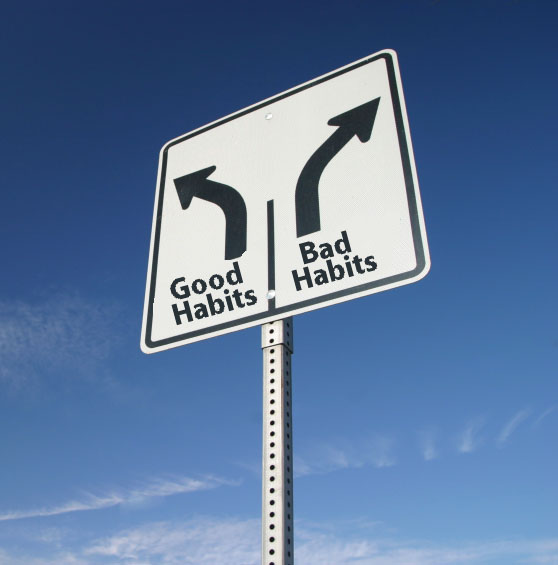
I’ve got quite a few habits I’d like to change, and it’s been on my mind a lot lately. From daily actions I take that harm me more than help me, to automatic thoughts that limits me in major ways, I have plenty of room to grow and change in positive ways. My inspired quest right now is exactly this: how do we change habits in a lasting way? Here’s my brainstorm so far:
​
1. Mindfulness meditation. This works especially for unconscious, compulsive actions or automatic thinking habits. We keep engaging in habits that don’t serve us because we are not thinking. It’s routine. It’s what we know and find comfortable. It’s a pathway that has been carved in our brain that is of least resistance, much like a river that cuts a pathway through rock and earth will not flow any other way unless a dam is built and a new pathway is carved. This takes a lot of work! Mindfulness meditation can help us wake up from the trance of habitual thinking and action. With practice, we can start to notice the moment we make the decision to act on a habit, or the moment a thought arises that does not serve us. If you want to know more about mindfulness meditation, ask me. 
​
2. Monitor and change behaviors. This includes several steps.
  • Choose the habit you want to change, and state the habit you want to create positively. For example, instead of, “I am not going to eat crappy food,” you would say, “I am only going to eat healthy foods.” This is important, because your brain follows your thoughts, so if you state what you are NOT going to do, your mind will be more likely to fixate on the forbidden than to focus on the positive change.
  • Commit to creating this new habit. There’s no room for half-assed goals here. You need to make a decision, and it needs to be definite.
  • Consider accountability partners.
  • Break down the practical steps you need to take to actualize the change into your daily life, and make these steps measurable goals. Create a schedule to support these changes. For instance, if my goal is that I want to exercise more, I need to decide how much more, and what I need to do to make my schedule accommodate this. I will then have a definite plan, and it is more likely to become routine. Guess what? Routines become habit!
  • Track your progress. Keep a note of it in your scheduler. Check in with it every day. Feel good when you see yourself doing it more and more.
  • Reward yourself as you meet your goals, that is, if changing the habit and meeting the goals is not reward enough itself!
3. Take it deeper. Sometimes a purely behavioral approach doesn’t work. This is generally because we did not truly commit or because we have deeper work to do around the habit we wish to change. Here are some ideas that you may find fruitful:
  • Examine resistance. A lot of times when we try to change habits, resistance comes up. Looking at this resistance may give you some clues to the deeper issues that may be present.
  • Look at the underlying needs. People engage in bad habits to fill needs that are not being filled in other ways. Ask yourself what is the need you are meeting in engaging in something that you see as unhealthy. Find another way to meet that need.
  • Be compassionate and allow yourself to cheat at times. Rigidity can create a narrow black and white view that makes change impossible. Create some space for yourself to make mistakes. Let yourself breathe, relax, and refocus.
  • Go deeper still. Changing habits can bring core issues to light. Spend some time exploring these issues if you feel they are ripe for healing. Journal. Talk with a friend or counselor. Dream on it. Take time to truly tune into yourself. You are so worth it!
22 Comments

Inclusive Therapy: Accept yourself, all of yourself. 

1/27/2016

4 Comments

 
"Do I contradict myself? Very well, I contradict myself. I am large, I contain multitudes."                                                      -Walt Whitman​

At times I notice all of the ways I judge and castigate myself. How I somehow have this underlying belief that I need to be perfect in order to be worthy. How I often "should" on myself, about small things, actions that don't matter so much in the long run. I think it must be a holdover from my Puritanical ancestors, but all I can say is, I am ready to stop.

And I think I may have an idea about how to do it.

Do you sometimes find yourself doing this? Maybe berating yourself for that extra bite of chocolate, or shaming yourself for having feelings of neediness? What is it for you?

I've been drinking a lot of coffee lately, and recently decided I need to cut it out completely. Whenever I make a decision like this, I immediately start obsessing on whatever it is I am not letting myself have. I convince myself I am having withdrawal symptoms, I get depressed, lonely, I WANT. I fantasize about the taste, the warmth, the giddy caffeine rush I will feel after drinking some of this godly nectar.

And then, when I break my promise to myself (which is eventually inevitable), I feel ashamed, like I don't value myself enough to be 100% controlled and basically...perfect.

It's a strange game to play, this all or nothing. What ever happened to moderation?

As I went through this internal battle, this back and forth talking in my head, I suddenly remembered something I learned from a training I attended with Bill O'Hanlon, called Resolving Trauma without the Drama.

And I said to myself, "It's okay if you drink the coffee. It's okay if you don't drink the coffee." So simple, yes? And I felt immediately better, because really, the more important thing in my life is not whether I drink a little bit of coffee. The more important thing is feeling okay with myself, accepting the decision I make, realizing it is a choice, not an action I am forcing myself to take. And then, surprisingly, my obsessive thoughts about how I just NEED some coffee lighten up a little, and I start thinking that maybe I don't really need that coffee after all.

Think about it. Someone tells you that you HAVE to do something. Do you want to do it? Of course not, even if it is the absolute best thing for you to do. And the more passionately someone tells you that you HAVE to do it, the more deeply you dig your heels in and decide that you most definitely do not. Or think of a time when someone told you that you couldn't do something. What was your reaction then? If you're anything like a normal person, you probably thought, "Yes, I can damn well do that thing. Watch me!"

Then, imagine that person saying, "Well, of course you don't have to. I just thought you might like to try, but it's up to you." And then maybe something shifts inside you. You may start thinking that maybe, just maybe, you want to try what this person is suggesting.

The time to use this inclusive validation work is when you:
  1. Find yourself saying you "can't, shouldn't or won't."
  2. Find yourself saying you "have to, should, or must."
  3. Encounter resistance (internally or in relationship).
  4. Experience inner conflict.
  5. Struggle with compulsions or obsessions.
  6. Feel ambivalent about something.
  7. Feel shame or a sense of devaluation.
  8. Encounter bigotry, negative stereotypes or negative projections (internally or in relationship).

This is how you use inclusive validation: 
  1. Give yourself permission to do or not to have to. For example, I tell myself I should really exercise more and eat less. And I get down on myself for having such weak will-power and being so lazy. Then, I stop, and tell myself, "I can exercise today and eat smaller portions, or I can live with the extra pounds and indulge in some yummy, healthy food, and I can stop worrying about hitting the gym today if I really don't feel like it. And that's okay. I love myself as I am right now.
  2. Include seeming opposites. This whole practice may seem hypocritical and non-committal, and it is, but at the same time, it's not! It looks like I'm copping out and will never meet my goals and therefore will never feel good about myself. But, really what I am doing is giving myself some breathing room. By going away from my goals, I move closer to them. This also applies to emotions. If you feel stuck in an emotion you don't want to feel because it doesn't feel good, or because you don't think you should feel that way, you can say to yourself, I can be mad right now, and I can be sad and scared, and I can be happy at the same time." Because life is complex. Nothing is cut and dry. Consider this quote from poet Adrienne Rich. "Anger and tenderness-my selves. I can believe they breathe in me as angels and not as polarities. Anger and tenderness-the spider's genius. To spin and weave in one moment anywhere. Even from a broken web." 
  3. Exceptions: That's the way it is, except when it's not. For example, it's always good to have a healthy diet and exercise and get plenty of sleep. Except, sometimes a person may want to stay up all night dancing, and eating whatever one wants. Why? Because this can be renewing. It's a break from the ordinary. Another example, it's important to be open with people, and not hide parts of yourself. Except when you have a secret you want to keep. You can keep it a secret as long as you want to. You have permission. Because it's yours. Because it represents that other part of yourself, that shadow self that we all have, and that's okay.

                  ​ And that is essentially what this work is all about: bringing light to the shadow.

Picture

​The shadow. As termed by Carl Jung, referring to all of the disassociated, unowned parts of ourself. The devalued, inhibited, suppressed, should-nots. The parts that, undealt with, turn around and bite us, acting as intrusive thoughts or compulsive, self-destructive actions. The parts that, when integrated, give us great strength and wisdom, that thank us for finally recognizing them as something other than monsters, the parts that, when finally un-shamed and re-valued, make us whole.
4 Comments

7 Ways to Heal from Stress and PTSD

11/2/2015

1 Comment

 
A few weeks ago, I wrote about the damaging effects of chronic, overwhelming stress. Today, I will follow this up with some ways to heal from these conditions. 

1. Hold and be held. Particularly with babies, tactile stimulation does wonders. In one study, a control group held babies for two hours a day while an experimental group held babies for four hours a day. After six weeks, the babies in the experimental group cried 43% less. This applied cross-culturally. Babies who are held more are less likely to develop PTSD or hypercortisolemia. While the first year is so critical for lifelong brain development, I don’t think human touch ever becomes less essential. Sure, maybe we don’t need four hours a day, but hugs, cuddles, and massages go a long way.

2. Medication and/or supplements. I am not one to believe in going straight for the magic pill, but there are several medications that can be helpful if you are feeling very overwhelmed or out of control. Several types of medication can activate Brain-Derived Neurotropic Factor(BDNF), which strengthens neural pathways and can protect the brain from damage by extreme stress. All antidepressants activate BDNF (this is their one common denominator). And guess what? Omega-3 fatty acids are also neural-protective. If you think you may need medication, of course talk with your doctor or psychiatrist.

3. Movement. Exercise also activates the neural pathway protector BDNF. It increases seratonin levels as well. Much of the feeling of PTSD is that of being “frozen.” Movement of any kind can immediately snap one out of that feeling.

4. Make choices that increase safety and structure in your daily life. In events of trauma and abuse/neglect, a common theme is powerlessness. Looking at brain chemistry, BDNF decreases when an individual experiences perceived powerlessness. Of course, it is not possible to always be in control of one’s circumstances, but it is possible to make choices that increase the chances of safety. It is also possible to have a regular schedule that increases predictability in your daily life. This will help. If this point interests you, look into the Seeking Safety program.

5. Mindfulness-based stress reduction. I love this one and regularly incorporate it into my work with my clients. It is a form of meditation and  consists of simple exercises one can do  to increase one’s mindfulness, which strengthens the brain and increases one’s ability to have control over where attention is placed. There is a lot of good science out there showing that this stuff really works.

6. Facing fears. The act of facing fears actually increases the frontal lobe’s ability to dampen down anxiety. It also gives one a restored sense of self-efficacy and control. When I am at my best, I try to face one fear every day. It is amazingly uplifting.

7. Eye Movement Desensitization Reprocessing (EMDR) Therapy. EMDR is a cutting edge, evidence based alternative to talk therapy for healing trauma or anxiety. It has been shown to work more rapidly in treating trauma than traditional therapies. This is highly desired as it allows you to spend less time reprocessing, or "digesting" the traumatic material. In this sense, you may move forward in life more freely without unresolved emotions from the past being activated by current triggers. This work is client-centered, meaning the resolution and integration of past traumatic events comes from your innate capacity for healing. This may leave you feeling empowered as you find your own ability to move through painful material and make sense of it in a way that lets you grow in wisdom and move forward in life the way that you want to. 
EMDR is an emotionally challenging therapy, and you may find your symptoms intensifying before they decrease. For this reason, it is important to have a current level of stability in your life before participating. It is also necessary to have the resources to regulate intense emotions. If you choose to pursue this, I can work with you on these skills, and assess whether or not you are in an appropriate space before beginning. I will also provide more detailed information to you directly about this process if you are interested in trying it.
1 Comment

How Chronic Stress Affects the Brain

9/24/2015

5 Comments

 
I went to a training on Post Traumatic Stress Disorder (PTSD) recently. I did learn quite a bit about how to treat PTSD, but the presenter’s information about the effects of chronic and/or severe stress was what really struck me and stuck with me. So, I am going to blather a bit, and it may be somewhat technical, but hopefully, some of you will find it interesting and learn from it as well.

Many of us have probably heard of the stress-related hormone cortisol. What I didn’t know was that chronically high levels of cortisol can cause a condition called Hypercortisolemia. Quite a mouthful, right? Here’s the thing: there are two very important structures in the brain that help us to regulate our emotions (the Arterial Cingulate, or AC, and the Hippocampus). These structures are packed with cortisol receptors, and if they are constantly being bombarded with cortisol, they become damaged and unable to do their job properly. This is hypercortisolemia.

I am talking lifelong effects, especially when this occurs in young, developing brains.

Impacts of hypercortisolemia:

1) The Artertial Cingulate (AC) has top down control over the amygdala. You know that reptilian part of your brain that gets triggered in the present because something reminds you of painful memories from the past? Even when you intellectually know things have changed, you can't calm down? That’s the amygdala working. It never forgets, but isn’t always rational. So basically the AC is the structure that tells the amygdala, “Calm down, relax, that was then, this is now.” If the AC is damaged, the amygdala is hyperactive, and anxiety goes up.

2) The risk of depression goes up from a 15% chance (general population) to a whopping 58% chance. Not fun.

3) Some of the other clinical outcomes include severe personality disorders (especially borderline, for you other psych nerds out there), attachment problems, vulnerability to PTSD, and chronic PTSD.

Obviously this is serious. Take a big breath of relief, because most people will not get this condition. It is not generally caused by your run of the mill everyday stress.

Causes/ Risk Factors of Hypercortisolemia:

1) Ongoing trauma or chronic stress

2) Prenatal conditions: Cortisol can cross the placental barrier and damage a developing brain. Depressed or chronically stressed pregnant women will want to have their cortisol levels screened and possibly take anti-depressants (or find other ways to reduce stress) if they are high.

3) Severe neglect

Now I am going to go on a bit of a tangent and talk a little bit about severe neglect, as the effects are quite tragic. Some of the behavioral symptoms of severe neglect include hypersensitivity (reacting more strongly to stress and taking longer to calm down), self-mutilation, and aggression.

Another symptom of severe neglect is alcohol abuse. In studies with primates, when all of the monkeys were given alcohol, it was the neglected monkeys who drank regularly and excessively.

Picture
Individuals who have experienced severe neglect also are more likely to have lifelong attachment problems. Studies on primates also show that neglected monkeys are not accepted, as they do not know how to read social cues. Neglected monkeys will have no mates. If they are inseminated, they will not take care of their babies (as a side note, this makes me kind of want to hurt whatever researchers felt the need to so deeply damage these poor monkeys).

Severe neglect can also cause lifelong neurobiological changes. Cortisol goes up (increased anxiety, depression, and lack of deep sleep). Seratonin goes down (more irritability, anxiety, impulsivity). Oxytocin goes down (causing problems with developing healthy attachments).

Another uplifting animal study: Infant rats were separated from their mothers for six hours a day very early in life. Another group was also separated, but continued to receive tactile stimulation. The control group was left to bond with their mommies. After a bit of all this, these amazing researchers threw all of the rats in a tub of water. Guess what? Those rats that stayed with their mommies and those rats that continued to receive tactile stimulation both fought for their little rat lives for TWICE as long.

Obviously, it is the very young brain that is most at risk here. However, experiencing trauma also happens to quite a lot of us, more than I like to believe is true.

Take home message? Take care of your baby. Get checked out if you are pregnant and tend toward depression or have a lot of stress in your life right now (but don’t stress!). If you do go through something traumatic, ask for help if you are feeling you are not getting back to normal after a month or so.

I will post soon with ways that you can deal with and heal these conditions.

5 Comments

    Author

    Leilani Jefferies, LCSW

    Archives

    November 2025
    August 2025
    July 2025
    March 2016
    January 2016
    November 2015
    September 2015

    Categories

    All

    RSS Feed

And you? When will you begin that long journey into yourself?"  -Rumi
​

Hours

M-F: 9am - 7pm

Telephone

831-566-9976

Email

[email protected]
  • Welcome
  • Therapy
    • Specialization
    • Rates and Insurance
  • REST Coaching
  • Contact
  • Blog